Your ultimate guide for experiencing the Mount Everest Basecamp Trek
The Mount Everest Basecamp Trek is one of the most famous treks in the world – and for good reason. The breathtaking views of the highest peaks on earth, the encounters with the Nepali culture and the adventure of venturing into one of the most remote regions of the world make this trek an unforgettable experience. If you are planning to do the Everest Basecamp Trek, we give you all the important information and tips you need for a perfect preparation.
We did the Gokyo Ri and Everest Basecamp Trek last year. It was our third trekking vacation in Nepal and was one of the most spectacular.
Why the Everest Trek?
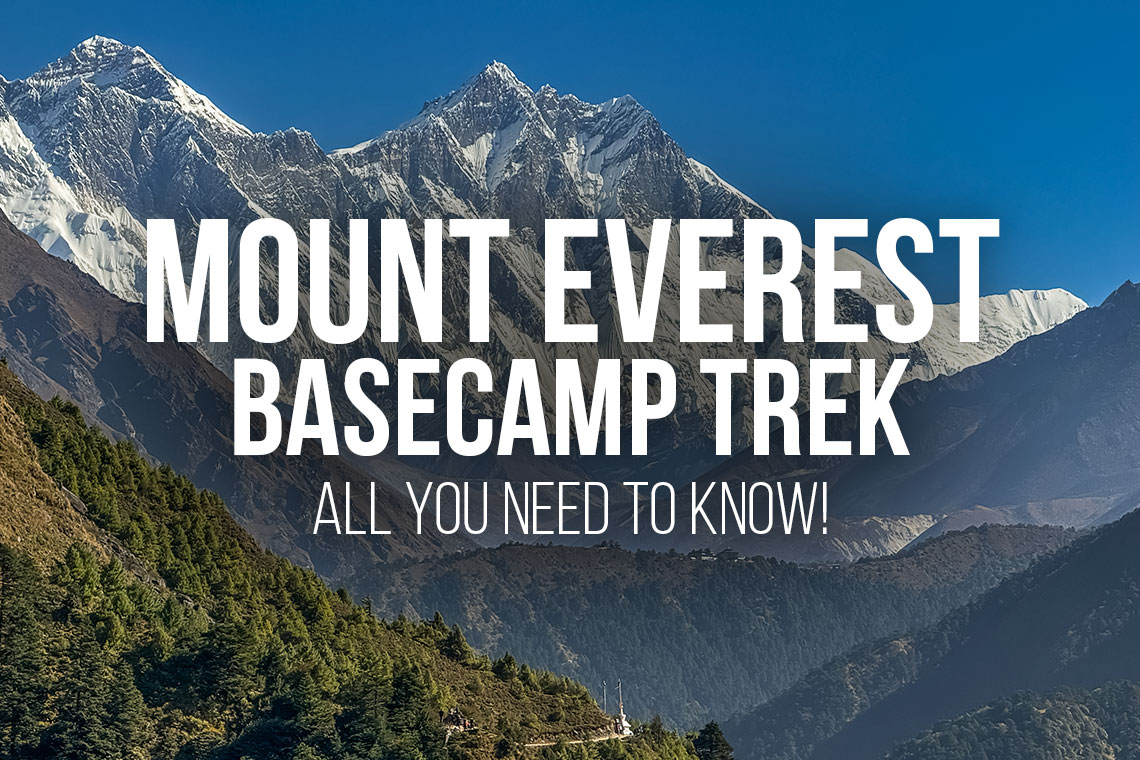
The Mount Everest Basecamp Trek takes you into the heart of the Himalayas. You hike through idyllic villages, along suspension rope bridges such as the Hillary Bridge, past Buddhist monasteries and prayer flags – and always with the impressive panorama of the Himalayas, with views of Mount Everest and its neighboring peaks in the background. It is a challenge for your mind and body but the reward is indescribable.
———————————————————–
Special deal for you!
We have put together a great deal for you with our partner agency Adventure Bound! You’ll get a whopping 10% discount on your next booking!
We have been working with Adventure Bound since 2014 and have and have referred many satisfied customers. We ourselves successfully completed the Annapurna Circuit, Manaslu Circuit and now Gokyo Ri + Everest Basecamp Trek with the agency. You can rely on Laxman Aryal and his experienced guides!
How does it work?
You will receive an individual 10% voucher code from us and can redeem the code on one of the following treks:
Mount Everest Basecamp Trek
Gokyo Ri
Annapurna Circuit
Manaslu Circuit
If you are interested in the discount, send us an email to mail@wetraveltheworld.de. We will then send you the discount code, which you can redeem at Adventure Bound on site in Nepal or upfront by e-mail. It’s all very straightforward.
Your individual code is valid for 6 months. The codes are non-transferable, cannot be combined and only one code is valid per booking.
———————————————————–
The most beautiful routes to Everest Base Camp
1. Mount Everest Base Camp Trek (EBC)
The classic route takes you in 12 to 14 days from the legendary village of Lukla (2,860 m) via Namche Bazaar (3,440 m) and Gorak Shep (5,207 m) to Mount Everest Base Camp (5,364 m). The highlight of the trek is the ascent to the Kala Patthar viewpoint (5,644 m).
The notorious Lukla airport is considered the most dangerous in the world and is the start and end point of the trek. In addition to its altitude and the steep cliff at the end of the runway, it is extremely short at just 527 meters. Landing and starting from there is already a once-in-a-lifetime adventure!
The route to base camp offers you the best chance of seeing Everest up close. Unfortunately, it is now very touristy and incredibly overcrowded. But of course, everyone wants to get to Everest Base Camp and see the mountain up close.
Info: In the high season you usually fly from Ramechhap to Lukla. This means you first have to drive from Kathmandu to Ramechhap and then go to Lukla. That’s a whole day for the adventurous journey. However, there are also options to fly directly from Kathmandu to Lukla. It is best to check with the agency beforehand. This usually involves additional costs, but is also much more convenient.
2. Gokyo Ri Trek
A quieter and definitely more beautiful alternative to the classic Everest Base Camp Trek is the Gokyo Ri Trek. Here you hike through the Gokyo Valley, past emerald green lakes and have a spectacular view of Everest, the surrounding mountains as well as the impressive Ngozumpa Glacier from the summit of Gokyo Ri. We combined the Gokyo Ri Trek with the Everest Trek and were traveling with a small group. Everything was professionally organized with the Adventure Bound agency from Nepal.
The route from Lukla (2,860 m) to Namche Bazaar (3,440 m) is exactly the same as the EBC route. At Sanasa or Phortse there is a turn-off to Gokyo and the Gokyo Ri. Once you reach the top at 5,357 meters, you have one of the most spectacular views there is. For us, it’s one of the most beautiful places we’ve ever been to!
The Gokyo Ri Trek then follows the same route back to Lukla. However, you have the option of continuing over the Chola Pass (5,420 m) to Everest Base Camp and then taking a circular route back to Namche Bazaar. You will need crampons for the pass, as you can see in the photos. This route is definitely a tough one, as you are at over 4 to 5,000 meters for much longer and it also gets a bit more technical.
3. Three Passes Trek
This most challenging of the three routes combines the best of the treks. It leads over three high and spectacular passes (Kongma La, Cho La, Renjo La) with incredible panoramas. It is less busy and you can still reach Everest Base Camp at the end – if you want to. The tour is ideal for experienced hikers and should not be underestimated.
Best time to travel Mount Everest Basecamp Trek
The main season for the Everest Trek is:
Spring (March to May): Clear views, pleasant temperatures and nature in bloom make this time particularly popular. The base camp on Everest looks like a small town at this time and Everest climbs are in full swing.
Fall (September to November): After the monsoon, the views are breathtaking and the weather is stable. Note: October is the absolute peak season and the trek is accordingly crowded. At this time of year, you won’t see any tents or climbers at the base camp. These are only there in spring.
Winter and summer are less recommendable, as the temperatures are extremely low (winter) or rain and clouds restrict visibility (summer).
Can you get into the Mount Everest base camp?
You can get to Everest Base Camp at 5,364 meters, but when the base camp is set up for the expeditions to the summit of Everest, you have no access to the base camp as a normal hiker. Without a permit, you are not allowed to walk through the camp and see everything. You can only get to the beginning of the base camp and watch the spectacle from there and take photos at the famous stone. You can only get a permit if you are part of an expedition. In October there is no base camp at all and it looks like you can see on the photos.
Preparation for the Everest Base Camp Trek
1. Condition and Fitness
The Everest Trek is no walk in the park. You will be hiking for 5 to 8 hours a day, tackling steep climbs and lots of stairs. Regular hiking, endurance training and strengthening your leg muscles will help you to get fit. We used to go to the gym regularly on the “Stairmaster” and specifically strengthened our leg muscles. That was worth its weight in gold on the many ascents.
2. Altitude sickness on the Everest Base Camp Trek
The biggest challenge is the altitude. Allow enough time and buffer days for acclimatization to avoid altitude sickness. Days with additional ascent, e.g. in Namche Bazaar, are crucial.
The acclimatization days on which you stay in the same place are often misunderstood as rest days: These are not days on which you do nothing! These days are for ascending higher and descending again to get used to the altitude. In Namche, for example, you climb another 400 to 500 meters higher to various viewpoints, such as the Hotel Everest View at 3,880 meters and then descend again to Namche at 3,440 meters. Don’t miss out on these acclimatization hikes, they are crucial!
3. Valid passport
Check early enough whether your passport is still valid for at least 6 months when you enter the country or whether you need to apply for a new one.
4. List with important To Do’s
Check vaccinations with your doctor
Have your vaccination card with you
Passport valid? Make copies
Have your doctor give you a standby antibiotic shortly before your trip
For the best insurance cover, join the DAV – from 01.09. only half the premium
Do you have international health insurance? Copy proof
Possibly travel cancellation insurance?
Collect 150-200 dollars in small bills (max. 50s) from the bank for tips and the like – otherwise only withdraw rupees locally
Trekking equipment complete?
Hiking boots broken in?
Get medication? Complete first aid kit
Technology: power bank, socket adapter & co.
Passport photo(s)
Fit enough? Increase your training?
Credit card working? What happens if it is blocked or stolen?
Store all important documents and data (ID cards, etc.) in the cloud
Visas and permits
For the Everest Basecamp Trek you need:
1. Nepal tourist visa
This is available at the airport in Kathmandu or in advance online at the immigration office (see Visa On-arrival). The online version saves you time on site. Fill out the application form and print it out. Take it with you and only pay on site in Nepal. It happens from time to time that people have to pay twice because the people at the local counter don’t know about the online payment. You can pay with euros or dollars.
2. TIMS card (Trekkers Information Management System)
The agency takes care of that.
3. Sagarmatha National Park Permit
The agency takes care of that.
Tip: It’s best to take two or three passport photos with you
They may be required for the permits.
Plan for buffer days on the EBC Trek
The more days you have available, the better. Plan at least two buffer days for acclimatization, but also at least two to three days to get from Kathmandu to Lukla and vice versa.
In recent years, the monsoon has moved further and further back and even in October there can still be fog and rain, making it impossible for airplanes and helicopters to fly to Lukla. There are often only small windows of time in the morning to get from Ramechhap or Kathmandu to Lukla.
Many hundreds of trekkers sometimes wait several days at the airport and then have time problems on the trek or even have to cancel the trek. With a lot of luck, we only had to wait an extra day to get to Lukla. When we arrived in Ramechhap, people had already been waiting there for two to three days. But even in between, we kept hearing on the trek that people had long waiting times to start and finish the trek.
Getting to Everest Basecamp Trek
The trek usually starts in Lukla, which can be reached by plane from Kathmandu. The flight to Lukla is considered one of the most spectacular – and exciting – in the world. Alternatively, you can plan a longer trek from Salleri, Jiri or Phaplu.
What to pack for the EBC Trek?
Essential equipment:
Hiking boots: Well worn-in and waterproof.
Layered-look clothing: For changing temperatures. Don’t forget a down jacket.
Sleeping bag: Suitable for temperatures down to -15°C.
Trekking pole: Helps with steep ascents and descents.
Backpack: With a capacity of around 30-40 liters, if you have a carrier.
Additional items:
Water bottle and sterilization tablets
Sun protection (cream, glasses, hat), at least 50
First aid kit and personal medication (for altitude sickness, diarrhea, fever, etc.) – If you are with a guide he also has an emergency kit
Snacks (energy bars, nuts)
Pack light, but be well prepared! You can also buy or rent many things in Kathmandu or Namche Bazaar.
Daily routine on the Mount Everest Basecamp Trek
A typical day starts early with a simple breakfast, followed by 4 to 8 hours of walking. At lunchtime, you take a break at a teahouse where you can eat traditional dishes such as dal bhat.
In the afternoon, you continue until you reach your destination for the day. The evening often ends with a simple dinner and conversations with other trekkers. Everyone meets in the common room, which is heated with yak dung. Card or board games are also popular. We had Phase10 with us and played the whole trek.
The bedrooms are poorly insulated and freezing cold. That’s why you’ll spend as long as possible in the heated room and crawl straight into your sleeping bag when you’re tired.
Accommodation and meals – Everest Basecamp Trek
Teahouses Mount Everest Basecamp Trek
Teahouses are simple guesthouses that offer accommodation and meals. The rooms are often simple, with a bed, blanket and pillow. Electricity and hot water cost extra at higher altitudes. You can meet other travelers in the dining room and warm up by the stove.
Food on the Mount Everest Basecamp Trek
Expect simple but nutritious meals: Dal bhat (lentils and rice), momos (dumplings) and noodle soups are standard. However, we can only eat dal bhat for 3 days and then switch to other dishes.
It’s actually the same everywhere: Pasta in different variations, soups, dal dhat, porridge and much more. Sometimes also burgers and pizza. There are a few really good restaurants in Namche Bazaar. If you want to eat a good pizza, we recommend the HighCamp Cafe.
We recommend skipping meat dishes from Namche Bazaar onwards, as most teahouses do not have refrigerators and the meat is often not fresh. And you don’t want to get an upset stomach.
Drink plenty of water and tea – but avoid alcohol, which can aggravate altitude sickness.
Tips for a successful Mount Everest Basecamp Trek
1. Walk slowly: “Pole pole”, as the Nepalese say. Take your time to get used to the altitude.
2. Stay hydrated: Drink at least 3-4 liters of water daily. The more liquid, the better.
3. Travel insurance: It should cover mountain rescue and helicopter evacuation. It is best to join the Alpine Club.
4. Respect the culture: visit monasteries respectfully, wear appropriate clothing and ask permission before taking photos of people.
5. Plan enough cash: There are no more ATMs after Namche Bazaar.
Altitude sickness – Mount Everest Basecamp Trek
Altitude sickness should be taken seriously. Typical symptoms are headaches, dizziness, nausea, loss of appetite and sleep problems. If they occur, stop climbing and rest. If in doubt: descend immediately! Medication such as Diamox can help, but is no substitute for slow adaptation. All guides have oximeters with them to regularly measure oxygen levels.
For us, the oxygen saturation at 5,000 meters was between 80 and 84%. At normal altitude, the saturation should be 95 to 99%. Our friend only had 56% and unfortunately had to turn back. It was as if he was hiking with only half a lung.
Altitude sickness is caused by the lower oxygen saturation (only half at 5,500 meters) in the air and can occur from as low as 2,500 meters. To avoid altitude sickness, slow acclimatization is crucial. You should not climb more than 300-500 meters per day and take regular rest days. Drinking plenty of fluids, eating light meals and avoiding alcohol also help to support the body. If symptoms occur, it is important to listen to your own body and descend if in doubt, as altitude sickness can be life-threatening in the worst case scenario.
If you prepare well, take care of your body and allow enough time for adaptation, you can minimize the risk and enjoy the spectacular hike to Everest Base Camp safely.
You’re looking for a different Trek?
The ultimate guide + travel report with many extras! On 276 pages you will find everything you need to know to prepare and complete one of the most beautiful hikes in the world. Including route suggestions, costs, packing list and city guides for Kathmandu and Pokhara!
Delivery time: Immediate download when purchasing with PayPal
Do I need a trekking-guide on Everest Basecamp Trek?
Whether you should take a guide for the Everest Basecamp Trek depends on your experience, your comfort level and your budget.
Personally, we always take a guide because it is a foreign country and we don’t speak the language. A guide can make your trekking experience a lot easier, as they are very familiar with the route, weather conditions and altitude adjustment. They will help you with orientation, organize accommodation and give you valuable tips on how to avoid altitude sickness. You also support the Nepalese economy with a local guide.
If you are an experienced trekker, are well prepared and use maps or GPS, you can also complete the trek independently. A guide is not compulsory on the EBC. The route is well signposted and there are numerous lodges along the way. However, you will have to take care of permits, accommodation and emergencies yourself.
If you value safety, comfort and cultural exchange, you should take a guide. Those who prefer to travel independently and have experience can also do the trek alone – but should be well prepared.
Hire a porter or carry the luggage yourself?
Whether you should carry your own luggage on the Everest Basecamp Trek or hire a porter depends on your experience, fitness level and personal preferences. If you choose to carry yourself, you will not only save money but also have full control over your pace and equipment. However, a heavy rucksack weighing 10 to 15 kilograms can be a real burden – especially in the thin mountain air. The trail is long and strenuous, and extra kilos on your back can make the trekking experience much more difficult.
A porter can be a great relief, especially if you want to fully enjoy the trek without burdening yourself with the weight of your backpack. In Nepal, porters are an important source of income for many locals, and with a fair salary you support the local economy. In most cases, they carry up to 20 kilograms per person, taking a considerable load off your shoulders.
This allows you to concentrate better on the beautiful landscape and the challenges of the altitude. Incidentally, the porters in Nepal don’t just transport things for tourists. Ordinary goods are also transported from A to B in this way, as transportation by mule is too expensive for many people of the mountains.
Ultimately, the decision depends on your personal preferences. If you are fit and see it as a sporting challenge, you can carry your own luggage. However, if you want to make the trek more comfortable, a porter can be a valuable support. Whichever option you choose, the Everest Basecamp adventure will be unforgettable!
Be aware of Mulis and Yaks!
On the Everest Basecamp Trek, mules and yaks are indispensable transportation animals. While mules are used to transport goods in the lower regions, yaks carry heavy loads such as equipment, food and fuel in colder areas. Their bell ringing often announces them from afar, so you can and should make way in good time. You should always stand on the mountain side, especially on narrow paths, so that you don’t accidentally get pushed off. Whether as a means of transportation or a fascinating encounter – mules and yaks are part of everyday trekking life in the Himalayas.
Personal conclusion Mount Everest Basecamp Trek
The Everest Trek is a challenge, but the rewards are priceless. The scenery, the culture and the feeling of standing at the foot of the world’s highest mountain make this journey unique. With the right preparation and the right attitude, the Everest Trek will be one of the greatest adventures of your life. Pack your backpack and get ready – Everest is waiting for you!




0 Kommentare
Your email address will be treated confidentially in accordance with our privacy-policy. Required fields are marked with *.